

There’s a lot going on at a construction site with heavy equipment, constant movement, and multiple trades working at once. This creates significant exposure not only for your workers but also for third parties, such as pedestrians, neighboring properties, and other non-employees who may be affected by your operations. One slip-and-fall by a visitor to the site, or a heavy object falling on a passerby, can result in a liability lawsuit that upends your project and business.
KEY TAKEAWAYS
- Third-party exposures are common on construction sites—from falling debris to vehicle incidents—and can quickly lead to costly liability claims.
- Most losses stem from controllable factors, such as poor site access, housekeeping, and equipment management.
- A proactive approach to safety and site organization can significantly reduce incidents.
Implementing loss control best practices and ensuring they are followed can help minimize claims, prevent potential litigation, and control General Liability insurance costs.
What Type of Third-Party Accidents Are Common on Construction Sites?
- Struck by Falling Debris/Objects: Tools, construction materials, or debris falling from heights outside the site perimeter onto pedestrians or vehicles.
- Slips, Trips, and Falls: Passersby or visitors falling due to uneven surfaces, debris, open trenches, or a lack of proper warning signs.
- Vehicle and Machinery Accidents: Pedestrians, delivery drivers, or inspectors struck by construction vehicles (e.g., cranes, dump trucks, excavators) navigating the site or entering/exiting.
- Site Condition Hazards: Injuries caused by unsecured hazardous materials, exposed wiring (electrocution), or falling into unprotected excavation areas.
- Defective Equipment Failures: Third parties injured by faulty tools or equipment manufactured by a third party, such as scaffold collapses or defective machinery.
- Damage to Adjacent Property: Cracked foundations, broken windows, or structural damage caused by vibration, falling materials, or construction activity.
- Completed Operations Claims: Injuries or property damage that occur after the job is finished, such as improperly installed materials causing harm to a third party.
- Improper Site Access and Security: Injuries involving unauthorized visitors, delivery personnel, or pedestrians entering poorly secured job sites.
- Material Handling Incidents: Third parties injured during loading/unloading or staging of materials near public or shared spaces.
What Strategies Should You Include in Your Loss Control Toolkit?
1. Control the Perimeter and Manage Site Access
Many third-party claims start with someone who shouldn’t have been on-site in the first place. Clearly defined perimeters, secure fencing, controlled entry points, and proper signage help prevent unauthorized access. This is especially important in high-traffic or urban areas where pedestrians, delivery drivers, and neighboring tenants may be in close proximity to active work zones.
2. Maintain Clean, Organized Work Areas
Slips, trips, and falling object incidents often come down to housekeeping. Keeping walkways clear, properly staging materials, and securing tools at height reduces the likelihood of debris leaving the site or creating hazards near public areas. Good site organization isn’t just about efficiency; it directly impacts third-party safety.
3.Secure Materials and Equipment at All Times
Unsecured materials, tools, and equipment can easily shift, fall, or create hazards—especially in areas exposed to weather or foot traffic. Proper storage, tie-downs, and equipment shutdown procedures help prevent incidents involving falling objects or unintended movement that could injure third parties or damage nearby property.
4. Manage Traffic Flow In and Out of the Site
Vehicle and equipment movement is one of the biggest sources of third-party claims. Establish designated entry and exit points, use spotters when necessary, and separate pedestrian pathways from equipment zones. Coordinating deliveries and minimizing congestion can significantly reduce the risk of vehicle and public accidents.
5. Protect Adjacent Property
Construction doesn’t happen in isolation. Vibrations, material handling, and equipment use can impact neighboring buildings and structures. Taking steps to monitor conditions, use protective barriers, and communicate with adjacent property owners helps reduce the risk of property damage claims and disputes.
6. Inspect and Maintain Equipment Regularly
Equipment failures, whether involving scaffolding, lifts, or tools, can lead to serious third-party injuries and property damage. Regular inspections, proper setup, and adherence to manufacturer guidelines help ensure equipment performs safely and as intended throughout the project.
7. Plan for Completed Operations Risks Early
Exposure doesn’t end when the job is done. Improper installation or overlooked issues can lead to injuries or damage after the project is completed. Implementing quality control checks, documenting work, and addressing issues before turnover helps minimize future claims tied to completed operations.
Control Workers' Comp Costs
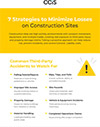
Download and share our loss control strategies with your supervisors and staff.
Mitigate Accidents, Minimize Claims: Download Now