

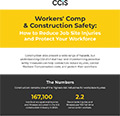
The U.S. construction industry experienced approximately 167,100 nonfatal occupational injuries and illnesses in 2024, according to the latest available data from the U.S. Bureau of Labor Statistics. Construction workers also faced one of the highest injury rates among major industries, with a total recordable case rate of 2.2 per 100 full-time workers.
Key Takeaways
- Many construction injuries are preventable through comprehensive safety programs that include employee training, regular site inspections, proper use of protective equipment, and clear communication among workers and supervisors.
- When injuries do occur, prompt medical treatment, timely reporting, and a strong workers’ compensation program help protect employees, control claim costs, and support a faster return to work.
Many construction injuries stem from preventable workplace hazards such as falls from ladders, roofs, and scaffolding; workers being struck by tools, equipment, or materials; overexertion from lifting and repetitive motion; vehicle-related incidents; and exposure to hazardous substances or environments. Falls continue to be one of the industry's most persistent risks and remain the leading cause of construction worker fatalities.
OSHA’s Fatal Four: What to Know
The Occupational Safety and Health Administration (OSHA) has identified four areas that are the most common causes of injuries and fatalities. Labeled the “Fatal Four,” they are as follows:
- Falls: Includes falls from heights, which are the leading cause of fatalities in construction, and slips and trips, which are one of the leading causes of injuries. Unfortunately, fall hazards are part of the territory on a job site, with floor and roof openings, surfaces without adequate support structures, and reliance on scaffolds and ladders.
- Struck by Object: These include injuries resulting from forcible contact (like a tool falling from a higher level) or impact between the injured person and an object or piece of equipment (like being hit by a car).
- Electrocution: Workers may encounter exposed wiring, temporary power systems, damaged extension cords, improperly grounded equipment, or overhead power lines. Potential injuries include nerve damage, muscular contractions, cardiac arrest, and burns, which are the most common shock-related injuries.
- Caught In-Between: These accidents occur when a worker’s body is caught, crushed, squeezed, compressed, or pinched between two or more objects. Common examples include workers caught between heavy equipment and walls, trapped in trench collapses, or pinned by shifting materials and machinery.
How to Minimize Injuries from Falls on a Construction Site
Contractors can reduce fall-related incidents by implementing a comprehensive fall protection program. Workers should be trained to recognize fall hazards and properly use personal fall arrest systems, guardrails, safety nets, and other protective equipment. Ladders should be inspected before use; scaffolding should be erected and maintained according to the manufacturer’s specifications; and floor openings should be properly covered or guarded. Daily jobsite inspections can help identify changing conditions and address hazards before work begins.
How to Prevent Injuries from Being Struck by an Object
Preventing struck-by injuries starts with maintaining clear communication and establishing controlled work zones. Hard hats should be worn at all times in designated areas, and tools used at height should be secured with lanyards when appropriate. Materials should be properly stored and stacked to prevent shifting or collapse. Contractors should also establish exclusion zones around crane operations and ensure spotters are used when backing vehicles or operating equipment in congested areas. Good housekeeping practices can further reduce hazards caused by loose materials and debris.
Measures to Take to Prevent Electrocution on the Job
To minimize the risk of electrocution, contractors should identify electrical hazards during pre-job planning and conduct regular site inspections. All electrical systems should be installed and maintained by qualified personnel. Ground-fault circuit interrupters (GFCIs) should be used on temporary power systems, and damaged cords or equipment should be removed from service immediately. Workers operating near overhead power lines should maintain required clearance distances, and lockout/tagout procedures should be followed whenever electrical equipment is being serviced or repaired.
Training employees to recognize electrical hazards and understand safe work practices is essential to preventing accidents.
Mitigating Caught In-Between Accidents
Contractors can reduce these risks by establishing safe work zones around heavy equipment and ensuring workers stay clear of moving machinery. Trenches should be properly sloped, benched, or protected with trench boxes and shoring systems when required. Employees should never work beneath suspended loads, and machinery should have appropriate guards in place to prevent contact with moving parts.
Clear communication between equipment operators and ground personnel, along with routine safety training, can help workers recognize hazardous situations before they become serious incidents.
What to Do If an Injury Occurs on a Construction Site
Even with strong safety protocols in place, accidents can still happen. If a worker is injured on a construction site, the first priority should always be obtaining appropriate medical attention. Serious injuries may require emergency medical services, while less severe injuries should still be evaluated promptly to prevent complications and ensure proper treatment.
Workers should report all injuries, no matter how minor they may seem, to a supervisor as soon as possible. Prompt reporting helps employers investigate the incident, address potential hazards, document the circumstances surrounding the injury, and comply with reporting requirements. Employers should also notify their Workers’ Compensation insurance company and follow established claims procedures to help ensure injured employees receive the benefits and support they need.
Workers’ Compensation insurance protects both employees and employers following a workplace injury, and typically provides medical care, temporary or permanent disability benefits, partial wage replacement, and death benefits.
By maintaining a strong safety culture, responding quickly to incidents, and carrying appropriate Workers’ Compensation coverage, contractors can better protect their workforce and minimize the financial impact of workplace injuries.
CCIS can provide contractors in Arizona, California, Nevada, and Oregon with Workers’ Compensation insurance.
Mitigate Construction On-the-Job Accidents
Take steps to prevent the most common accidents that occur on job sites
Frequently Asked Questions
Q. What are OSHA’s Fatal Four hazards?
A. OSHA’s Fatal Four are the four leading causes of construction worker fatalities: falls, struck-by-object incidents, electrocutions, and caught-in-between accidents.
Q. What should I do if a worker is injured on a construction site?
A. The first priority is ensuring the injured worker receives appropriate medical attention. The injury should then be reported to a supervisor immediately, documented properly, and submitted to the company’s Workers’ Compensation insurer according to established reporting procedures.
Q. How can contractors reduce Workers’ Compensation claims?
A. Contractors can reduce claims by investing in employee training, conducting regular job site inspections, enforcing safety protocols, maintaining equipment, and addressing hazards before accidents occur. A proactive safety culture is one of the most effective ways to reduce injuries and control Workers’ Compensation costs.